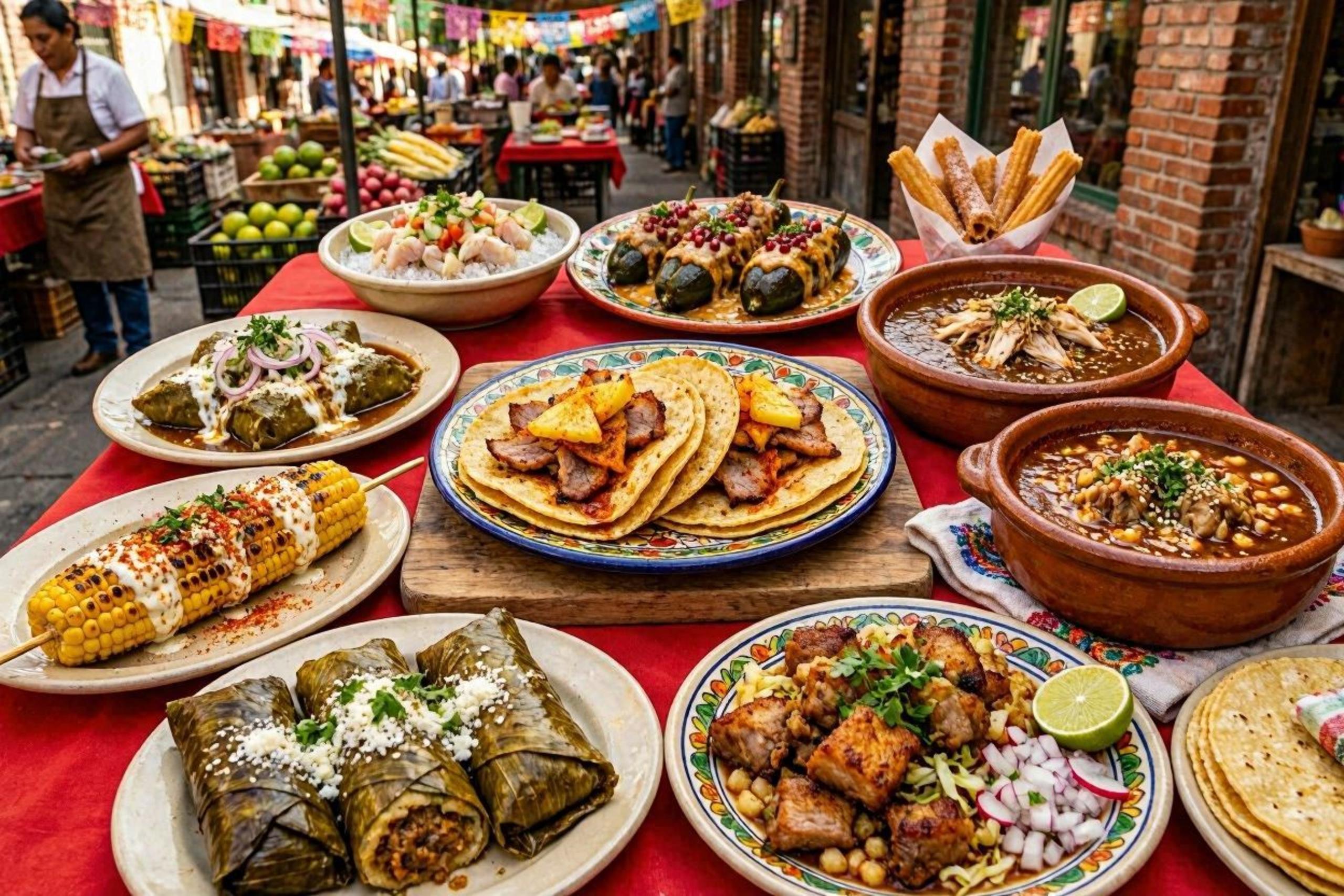
In 2010, Mexican cuisine became one of the first in the world to be inscribed on UNESCO's Intangible Cultural Heritage list — not for any single dish, but for the entire living system of ingredients, techniques, and knowledge passed between generations. Mexican food is intensely regional: a taco in Baja California tastes nothing like one in Mexico City, which tastes nothing like one in Oaxaca. This guide covers the 10 essential Mexican foods, where to find the definitive version of each, and what you should expect to pay.
Mexico Food Quick Facts• Currency: Mexican Peso (MXN) — MXN 17 approx. USD 1
• Street taco: MXN 15-30 each | Sit-down meal: MXN 80-200
• Meal times: Breakfast 7-10am | Comida (main meal) 2-5pm | Dinner 8-10pm
• Water: Drink bottled or purified water; ice in good restaurants is purified
• Spice warning: Always ask "es muy picante?" (is it very spicy?) before ordering
1. Tacos
The taco is Mexico's most democratic food: two small corn tortillas, protein, and fresh toppings — nothing more. The tortilla must be corn (flour is a northern/Tex-Mex variation), freshly made and slightly charred on a comal griddle. Regional styles diverge sharply: tacos al pastor in Mexico City (pork marinated in dried chiles and pineapple, shaved from a vertical spit like shawarma), carnitas in Michoacan (slow-braised pork), barbacoa in Hidalgo (pit-roasted lamb wrapped in maguey leaves), and fish tacos in Baja California (battered fish, cabbage, crema, pico de gallo).
Where to eat: El Huequito (Mexico City, since 1959) for al pastor; Tacos El Gordo (Tijuana) for Baja-style fish tacos; any taqueria with a long line of locals at 8am means the carnitas are made fresh that morning.
Price range: MXN 15-35 per taco at street stalls | MXN 50-90 at sit-down taquerias.
Pro tip: A taqueria running out of its star protein by 1pm means it was made fresh that morning. Plan accordingly — the best spots open at 8am and sell out.2. Mole
Mole is the most complex sauce in Mexican cooking — over 20 types exist, and some recipes contain 30+ ingredients including multiple dried chiles, chocolate, nuts, spices, charred tortillas, and sometimes dozens of hours of preparation. Mole negro from Oaxaca (the darkest, most bitter-sweet version) is considered the most sophisticated. Mole poblano from Puebla (turkey, ancho chiles, chocolate) is the most internationally famous. A good mole takes a skilled cook 1-3 days to prepare from scratch.
Where to eat: Casa Oaxaca (Oaxaca City) for refined mole negro; El Mural de los Poblanos (Puebla) for mole poblano in its birthplace; family-run comedores in Oaxacan markets for the most traditional versions.
Price range: MXN 80-160 for a mole plate at a comedor | MXN 200-350 at a restaurant.
3. Tamales
Masa (corn dough) spread on a corn husk or banana leaf, filled, folded, and steamed for 1-2 hours — tamales are ancient (pre-Columbian) and still central to Mexican celebrations and daily life. Fillings vary by region: rajas (roasted poblano strips with cheese) and red chile pork in central Mexico; black bean and chipilín herb in Chiapas; sweet pink tamales with raisins for Dia de los Muertos. Tamaleras sell them from giant steamer pots on street corners, usually from 7am.
Where to eat: Tamales Madre (Mexico City) for creative modern versions; street vendors outside Metro stations in CDMX for traditional morning tamales with atole drink; Mercado de la Merced (Mexico City) for dozens of regional varieties.
Price range: MXN 15-30 at street stalls | MXN 60-120 at restaurants.
4. Chiles en Nogada
One of Mexico's most visually striking dishes and fiercely seasonal: a large poblano pepper stuffed with picadillo (ground pork, dried fruit, almonds, spices) representing centuries of Spanish-Mexican fusion, covered in walnut cream sauce and topped with pomegranate seeds and parsley — white, red, and green, the colours of the Mexican flag. It is only made in late August and September when walnuts are fresh and pomegranates in season. Eating it outside of this window means either frozen ingredients or a restaurant cutting corners.
Where to eat: El Mural de los Poblanos (Puebla, the dish's origin city) during August-September; Azul y Oro (Mexico City) for a refined version; any Poblano family restaurant during the season.
Price range: MXN 180-350 at a mid-range restaurant.
5. Pozole
A hearty pre-Hispanic stew built around hominy (dried corn kernels treated with limewater until they bloom and become chewy), slow-cooked with pork or chicken for hours until the broth is deep and rich. Three regional versions: rojo (red chile broth, most common), blanco (clear broth, subtler), and verde (green tomatillo and chile broth, Guerrero-style). Served with a tray of garnishes — shredded cabbage, radishes, dried oregano, lime, tostadas — that diners add themselves. Pozole is heavy, warming, and one of Mexico's great hangover cures.
Where to eat: El Pozole de Moctezuma (Mexico City); Las Pozoleras (Guerrero state) for the green coastal version; any mercado comedor in central Mexico on weekend mornings.
Price range: MXN 70-130 for a bowl at a comedor | MXN 150-250 at a restaurant.
6. Elote & Esquites
Mexico's street corn comes in two forms: elote is corn on the cob slathered with mayonnaise, cotija cheese, lime, and chili powder; esquites is the same kernels scraped off into a cup with the same toppings plus epazote herb and often crema. Both are sold from carts at night markets, outside schools, and at fairs. The quality of the cotija cheese (a dry, crumbly, salty cheese from Michoacan) makes a significant difference — fresh cotija is vastly superior to the pre-packaged kind.
Where to eat: Street carts at Parque Mexico (CDMX) or any evening market (tianguis); Mercado de Medellín (CDMX) for fresh corn from vendors who have been there for decades.
Price range: MXN 25-50 per serving.
7. Enchiladas
Corn tortillas dipped in chile sauce, filled (chicken, cheese, or beans are most common), rolled or folded, and served covered in more sauce and topped with cream, onion, and cheese. The defining element is the sauce: enchiladas verdes use tomatillo-based green salsa; enchiladas rojas use dried red chiles; enchiladas mole use — obviously — mole. Enchiladas suizas (Swiss-style, created in Mexico City) use a cream-based green salsa and are gratineed with cheese.
Where to eat: Contramar (Mexico City) for seafood enchiladas; El Cardenal (CDMX) for traditional enchiladas with mole; any market comedor for honest, inexpensive daily versions.
Price range: MXN 60-120 at a comedor | MXN 150-250 at a restaurant.
8. Guacamole
Fresh ripe Hass avocados (Mexico grows 45% of the world's supply) mashed in a molcajete (volcanic stone mortar) with lime, salt, white onion, serrano or jalapeño chile, and fresh cilantro. The key is ripe avocados and a molcajete — the rough volcanic surface grinds the ingredients into a coarser, more complex texture than a blender produces. Restaurant-made tableside guacamole prepared to your spice preference is one of Mexico's best dining rituals.
Where to eat: Made tableside at Pujol (Mexico City — one of the world's best restaurants) for a transcendent version; any good Mexican restaurant; Mercado Roma (CDMX) for fresh guacamole with house-made totopos.
Price range: MXN 50-100 as an appetiser.
9. Churros
Fried ridged dough dusted in cinnamon sugar, served with a cup of thick, dark Mexican drinking chocolate for dipping. Mexican churros are longer and thinner than Spanish versions, with a lighter dough. The best churros are eaten immediately — within 5 minutes of frying. Churreria El Moro in Mexico City has been frying them since 1935 and is open 24 hours; ordering them at 2am after a night out is a Mexico City tradition.
Where to eat: Churreria El Moro (Mexico City, 24 hours, multiple locations); street vendors outside churches on Sunday mornings; Mercado de San Juan (CDMX) for fresh-fried versions.
Price range: MXN 30-60 for a portion with chocolate.
10. Tlayuda
Oaxaca's answer to pizza: a large, oval, partially crisped corn tortilla (30-40cm) spread with black bean paste, Oaxacan string cheese (quesillo), and topped with tasajo (dried beef), chorizo, or cecina (salted dried pork), then folded in half. The combination of the smoky, crispy tortilla with the stretchy cheese and slow-cooked meat is deeply satisfying and unlike anything else in Mexican food. Eaten at comedores and street stalls throughout Oaxaca.
Where to eat: El Tule (Oaxaca City) for a classic version; market stalls in Mercado Benito Juarez (Oaxaca) for the cheapest authentic tlayudas; Casa Oaxaca for a refined take.
Price range: MXN 80-140 at a comedor | MXN 160-280 at a restaurant.
Explore Mexico's Food Culture with a LocalMexico City and Oaxaca rank among the world's top food destinations. A market tour or street food walk with a local guide covers 8-12 tastings and explains the history and technique behind each dish.
Mexico City Food Tours on GetYourGuide | Mexico Food Experiences on Viator
Eating in Mexico: Practical Tips
- Comida is the main meal: Eaten between 2-5pm, this is when restaurants are busiest and menus are most complete. Skip the light dinner and eat a full comida — it is better value and more authentic.
- Follow the blue plastic chairs: The cheapest, most delicious food is at market comedores with plastic chairs and no menu — point at what looks good from the pot.
- Salsa bars are free: Taquerias offer multiple salsas on the counter — start mild and work up. The bright red ones are usually the most dangerous.
- Aguas frescas: Non-alcoholic drinks made from fruit, rice (horchata), or hibiscus (jamaica) — refreshing, safe, and a fraction of the price of bottled drinks.
- Mezcal vs tequila: Both are from agave, but mezcal (often from Oaxaca) has a smoky depth that tequila lacks. Try a local mezcal at a mezcaleria — the good ones are sipped, not shot.