Iceland is not cheap — but it is absolutely possible to visit on a budget. The key is timing. Flights, hotels, car rentals, and guided tours vary by as much as 60-80% between peak summer (July-August) and the cheapest shoulder months (April and October). Choose the right month, stay in guesthouses instead of hotels, shop at Bonus supermarket, and focus on the country's extraordinary free natural attractions — and you can have one of the world's most spectacular travel experiences without the price tag that Iceland's reputation suggests.
This guide breaks down every month, explains what you gain and lose, quantifies the cost difference, and gives you the practical tools to plan a genuinely affordable Iceland trip in 2026-2027.
💶 Iceland Daily Budget Benchmark (per person)• Budget: EUR 85-110/day (hostel dorm or guesthouse + supermarket meals + free attractions + car share)
• Mid-range: EUR 140-200/day (guesthouse private room + one restaurant meal + one paid tour per day)
• Premium: EUR 280-400/day (hotel + restaurants + Blue Lagoon + guided glacier/whale tours)
• Currency: Icelandic Krona (ISK). 1 EUR = approx. ISK 150. 1 USD = approx. ISK 138.
📅 Month-by-Month Breakdown: When to Go for the Best Value
January — Dark but Cheap, Northern Lights Peak
January is one of Iceland's cheapest months for flights and accommodation, with prices 30-50% below the summer peak. The trade-off: only 4-5 hours of usable daylight in Reykjavik (sunrise ~11 AM, sunset ~3:30 PM). Temperatures average -1 to +3C in the capital. Highland F-roads are completely closed.
What January offers is exceptional: the best odds for Northern Lights viewing (near-daily potential from October through March, weather permitting), dramatic winter landscapes, ice cave tours in Vatnajokull glacier (only available October-March), and a Reykjavik that belongs to Icelanders rather than tourists. Hotels and guesthouses are significantly discounted. A Reykjavik hostel dorm costs EUR 30-40/night vs EUR 55-75 in summer.
Best for: Northern Lights hunters, photography travelers, budget maximisers who don't mind cold and dark. Flight cost from London: EUR 120-220 return. Recommended? Yes for committed budget travelers — the savings are real and the experiences unique.
February — Northern Lights, Ice Caves and a Little More Light
February is similar to January in cost (still 30-45% below peak) but with noticeably longer days by the end of the month (up to 9 hours by late February). The Northern Lights remain excellent, ice cave tours are still running, and roads are passable in the south (Ring Road is generally driveable year-round). Valentine's Day sees a small accommodation price spike in Reykjavik — avoid that specific weekend if budget is the priority.
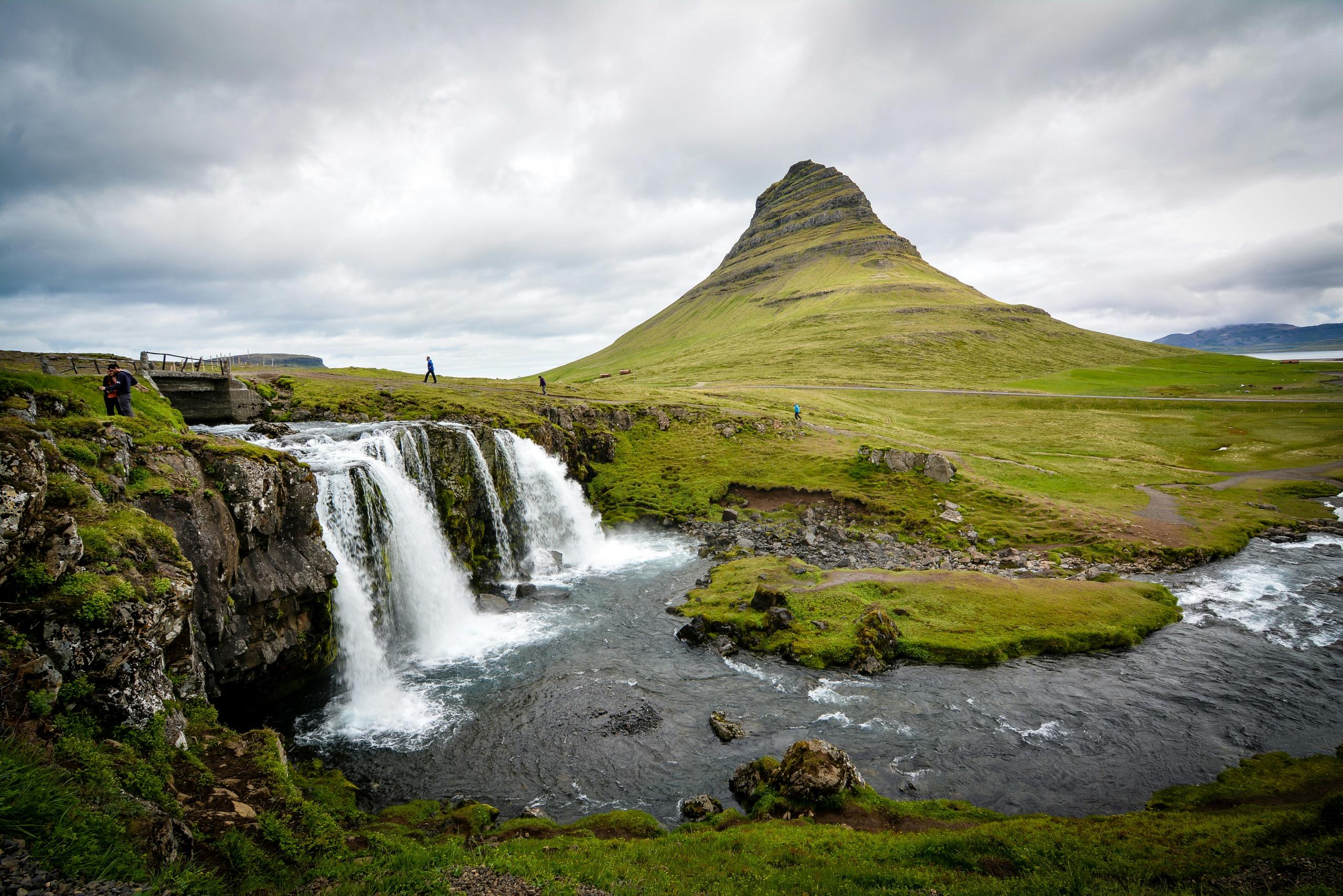
The Snaefellsnes Peninsula, accessible year-round by 2WD, is stunning in winter — the glacier-topped volcano that inspired Jules Verne's Journey to the Centre of the Earth, plus Kirkjufell mountain and Arnarstapi sea cliffs, with only a handful of other visitors. A day trip costs the price of petrol (ISK 20,000-25,000 / EUR 130-165 split between car occupants) plus guesthouse or campsite if staying overnight.
Best for: Northern Lights, ice caves, winter hiking. Flight cost from London: EUR 130-240 return. Northern Lights odds: High (clear sky dependent — check aurora forecast at vedur.is).
March — The Budget Sweet Spot Begins
March is one of the best-value months in Iceland. Days lengthen dramatically (11+ hours of daylight by the equinox on March 20), Northern Lights are still visible in the first half of the month, snowpack is at its most photogenic (especially in the Westfjords and around Akureyri), and prices remain 20-35% below peak. Puffins start returning to Iceland in late March-early April.
Waterfalls are thundering with snowmelt. Seljalandsfoss and Skogafoss are at or near their peak flow. The Golden Circle (Thingvellir, Geysir, Gullfoss) is fully accessible and dramatically beautiful in late winter light. Car rental prices are still reasonable — a small 2WD car costs EUR 50-80/day in March vs EUR 90-150/day in July.
Best for: Northern Lights + waterfalls combination, photography, good balance of light and budget. Flight cost from London: EUR 130-260 return. Top tip: Book March travel by January for the best flight prices.
April — The Single Cheapest Month to Visit Iceland
April is the cheapest month overall for Iceland travel on a per-experience basis. Flight prices hit their annual low (often EUR 100-180 return from the UK), accommodation is at winter prices before the spring spike, F-roads (highland tracks) begin reopening mid-to-late month depending on snowpack, and Iceland is genuinely beautiful — green shoots of Arctic moss, still-powerful waterfalls, and daylight until 9 PM by month's end.
The downsides: Northern Lights are fading (the sky is too bright for reliable viewing by mid-April), weather can still be cold and changeable, and some highland routes remain closed until late May or June. But the Golden Circle, South Coast, Snaefellsnes Peninsula, and Reykjavik are all fully accessible and spectacular in April.
Puffins return to their breeding colonies from mid-to-late April — the cliffs at Dyrholar and Latrabjarg in the Westfjords offer spectacular free viewing. Lupine wildflowers begin blooming in late April, covering hillsides in purple by early May.
Best for: Budget-first travelers, nature and wildlife, road trips without crowds. Flight cost from London: EUR 100-180 return. Budget daily cost: EUR 80-105. Top recommendation: the best overall month for budget travelers.
May — Beautiful and Getting More Expensive
May brings Iceland's most stunning landscapes of the year: lupine flowers cover the roadsides in blue-purple (a non-native species that has naturalised extensively), waterfalls are at peak flow from snowmelt, and daylight is extending rapidly toward the midnight sun (20+ hours by late May). The trade-off is rising prices — flights, accommodation, and car rentals all increase 15-25% above April as summer demand kicks in.
Most highland routes (F-roads) remain closed until June, but the main Ring Road and all coastal routes are fully open. Lambing season makes Icelandic farms especially photogenic, and some farm guesthouses offer exceptional value (EUR 80-120/night with breakfast). The Blue Lagoon is open but still fully priced (EUR 65-120+). Budget alternative: Reykjadalur thermal river (free, 3 km hike, 45 minutes) or Seljavallalaug outdoor pool (free, historic, remote).
Best for: First-timers wanting good weather + manageable crowds. Flight cost from London: EUR 140-280 return. Budget daily cost: EUR 95-120.
June to August — Peak Season (Avoid If Budget Is Priority)
June, July, and August are Iceland's most expensive months — by a significant margin. Flights from London average EUR 200-450 return in July. A guesthouse private room that costs EUR 90 in April costs EUR 150-200 in July. Car rentals for a basic 2WD jump to EUR 90-150/day. Campsite pitches that are quiet in April are packed shoulder-to-shoulder in August.
What peak season gives you: the midnight sun (June 21 has no true darkness in Reykjavik), all F-roads open (requires 4WD for most), maximum wildlife (puffins, whales, seals, Arctic terns), warmest temperatures (12-16C), and the most dramatic landscapes. The Westfjords and Highlands are most accessible in July-August. If you can only travel in summer, book everything 3-6 months in advance.
Average July daily cost: EUR 150-200+ mid-range. Peak flight cost (July): EUR 220-450 return from London. Budget verdict: Avoid peak season if you have flexibility — you will spend 40-60% more for a significantly more crowded experience.
September — The Best Month Overall (Budget and Experience)
September is widely considered Iceland's finest travel month and the best for balancing cost, weather, and experiences. Tourist crowds drop sharply after Labor Day (early September). Prices for flights, accommodation, and car rentals fall 25-35% below August levels. Northern Lights season begins in earnest (first possible sightings from mid-September). Waterfalls remain powerful. Temperatures are cool but pleasant (8-12C). Autumn colours begin in the highlands.
September still has long daylight hours (12-14 hours by mid-month, decreasing toward the equinox on September 22). The F-roads are still open in early September and begin closing mid-to-late month. Whales are still plentiful off Husavik (the best whale-watching destination). The Reykjavik Culture Night festival (mid-September) fills the city with free events, concerts, and exhibitions — one of Iceland's best free experiences.
Best for: Northern Lights + good weather + manageable prices — the optimal combination. Flight cost from London: EUR 140-260 return. Budget daily cost: EUR 90-115. Highly recommended.
October — Best Month for Northern Lights on a Budget
October is the peak Northern Lights month for budget travelers: prices are falling toward winter lows (30-40% below July), Northern Lights odds are high and improving, days are shorter (9-11 hours) but still manageable, and the tourist crush of summer is entirely gone. Icelandic storms start picking up in October, but they pass quickly and the dramatic skies they leave behind are spectacular.
Most F-roads close in early-to-mid October, but the Ring Road, South Coast, Golden Circle, and Snaefellsnes Peninsula remain fully accessible. Ice cave tours in Vatnajokull start operating from late October, giving budget travelers access to one of Iceland's most spectacular paid experiences at shoulder-season prices. Guesthouse prices drop significantly — many family-run guesthouses on the Ring Road offer exceptional value (EUR 75-110/night private room with breakfast).
Best for: Northern Lights, ice caves, Ring Road road trip, budget maximisers. Flight cost from London: EUR 120-220 return. Budget daily cost: EUR 82-108. Second best month overall for budget travelers (after April).
November and December — Cheapest Flights, Best Northern Lights Skies
November offers the lowest flight prices of the year and the darkest skies — ideal for Northern Lights viewing. The trade-off: very short days (5-6 hours in late November), cold temperatures (-2 to +4C), and limited operational hours for some attractions. December adds Christmas magic to Reykjavik (the city does Christmas extraordinarily well) but note that Christmas week (December 24-31) carries a significant price premium. Early December (1-22) is actually excellent value with strong Northern Lights potential.
Best for: Extreme budget, Northern Lights photography, Reykjavik Christmas (early December). Flight cost from London: EUR 100-180 return (non-Christmas). Budget daily cost: EUR 80-100.
🆓 Free Attractions in Iceland (Skip the Paid Tourist Traps)
Iceland's greatest natural wonders cost absolutely nothing to visit. Here is what you can experience for free:
- Thingvellir National Park — UNESCO World Heritage Site, site of the world's oldest parliament (930 AD), and the only place where you can walk between the North American and Eurasian tectonic plates. Free entry (parking fee ISK 750).
- Geysir geothermal area — Watch Strokkur geyser erupt every 5-10 minutes. Free to walk around.
- Gullfoss waterfall — One of Europe's most powerful waterfalls. Free entry.
- Seljalandsfoss and Skogafoss — Two of Iceland's most beautiful waterfalls, both free (small parking fee at Seljalandsfoss).
- Reynisfjara black sand beach — Iceland's most dramatic beach, with sea stacks and basalt columns. Free entry.
- Jokulsarlon glacier lagoon — Iceberg-filled glacial lake at the base of Vatnajokull glacier. Free to walk around the shoreline.
- Kirkjufell mountain — Iceland's most-photographed mountain. Free to visit and hike around (summit is a challenging climb).
- Reykjadalur thermal river — A geothermal river where you can swim for free, 30-40 min hike from the carpark. The budget alternative to the Blue Lagoon.
- Krysuvik geothermal area — Bubbling mud pools and sulphurous steam vents, 40 min from Reykjavik. Completely free.
- All hiking trails — Landmannalaugar (summer only), Fimmvorduhals, Glymur waterfall, and hundreds more. Free of charge.
💰 Paid Activities: What Is Worth It vs What to Skip
- Ice cave tour in Vatnajokull (EUR 95-180): Worth every cent — an extraordinary experience available only with a guide (for safety). Available October-March. Book well in advance.
- Whale watching from Husavik (EUR 65-95): Husavik (north Iceland) has the highest success rate in Europe for humpback whale sightings (90%+ in summer). Worth it as a once-in-a-trip experience.
- Northern Lights guided tour (EUR 70-120): Skip it. A guide will drive you to dark areas, but you can do the same yourself with a rental car and the vedur.is aurora forecast app for free. The real cost of Northern Lights viewing is a clear night sky and patience.
- Blue Lagoon (EUR 65-120+): Overpriced and overcrowded by most experienced Iceland travelers' assessment. Instead: Reykjadalur thermal river (free), Seljavallalaug pool (free), Myvatn Nature Baths (north Iceland, EUR 25-35 — a genuine alternative).
- Golden Circle guided tour (EUR 60-100): Do it yourself by rental car for significantly less. The route is well-signed and easy to navigate independently.
🛒 Supermarket Guide: Eat Well Without Restaurant Prices
Restaurant meals in Iceland are genuinely expensive — a basic burger and drink costs EUR 20-28, a sit-down dinner EUR 35-60 per person. Supermarket shopping is essential for budget travel. Here is your guide:
- Bonus (yellow pig sign): Iceland's cheapest supermarket chain. The benchmark for budget grocery shopping. Found in Reykjavik and all major towns on the Ring Road. Excellent for bread, dairy, eggs, tinned fish, skyr (Icelandic yoghurt), and frozen meals.
- Kronan: Similar prices to Bonus, slightly wider selection in some locations. Good backup when Bonus is not available.
- Netto: Competitive prices, found in larger towns. Reliable for fresh produce and basics.
- Costco Reykjavik: Excellent value for groups and self-catering trips — large quantities of cheese, meat, and packaged goods at wholesale prices. Membership required (ISK 5,900 / EUR 38 — worth it for 7+ day self-catering trips).
- Avoid 10-11 and N1 petrol station shops: Convenience stores charging 40-80% above supermarket prices. Only useful in emergencies between towns.
Daily supermarket food budget: EUR 15-25/person/day (breakfast + packed lunch + simple cooked dinner). Compare to EUR 50-80/person/day eating at restaurants for all meals.
🚗 Car Rental Budget Tips
A rental car is essential for experiencing Iceland beyond Reykjavik — public transport outside the capital is extremely limited. Here is how to keep rental costs manageable:
- Book well in advance: Car rental prices in Iceland are set by demand. Book 3-6 months ahead for summer (EUR 90-150/day for a basic 2WD) and 4-6 weeks ahead for shoulder season (EUR 45-80/day).
- You only need 4WD for F-roads: If you are not driving into the Highlands (open July-September only), a standard 2WD car covers the entire Ring Road and all major sites including the South Coast, Golden Circle, and Snaefellsnes Peninsula.
- Fuel is expensive: Budget ISK 300-360/litre (EUR 2.00-2.40). Fill up in larger towns — petrol is slightly cheaper than at isolated rural stations. A full Ring Road circumnavigation (approx. 1,332 km) uses roughly 70-90 litres of fuel (EUR 140-200).
- Split costs: A rental car shared between 2-4 people is one of the most cost-effective ways to travel Iceland. The car cost per person drops dramatically, and you can share supermarket cooking costs at guesthouses with kitchens.
- Insurance: Gravel protection insurance (SAAP) is worth adding for Iceland — loose gravel on Ring Road sections can chip windscreens. Sand and ash protection (SAAP) is essential if driving near volcanic areas. Costs EUR 8-18/day extra but covers otherwise very expensive repairs.
Icelandair and PLAY are the main Iceland carriers — but Transavia, easyJet, and British Airways also fly to Reykjavik Keflavik. Compare all airlines for your dates.
Search Flights to Iceland on Skyscanner → 🏨 Find Budget Accommodation in Iceland:
Guesthouses along the Ring Road often include kitchen access and breakfast — dramatically reducing your food costs compared to Reykjavik hotels. Filter by "kitchen access" and "breakfast included."
Browse Iceland Guesthouses and Hostels on Booking.com →
💶 Iceland Budget Trip Breakdown (7 Days, April/October)
- Return flights from London: EUR 130-200
- Car rental (7 days, basic 2WD): EUR 315-490 (EUR 45-70/day)
- Fuel (Ring Road, approx. 1,000 km): EUR 130-170
- Accommodation (7 nights, guesthouse/hostel mix): EUR 350-560 (EUR 50-80/night)
- Food (supermarket-heavy, one restaurant meal every 2 days): EUR 175-245
- One ice cave tour or whale watching: EUR 90-150
- All other attractions (mostly free): EUR 20-40 (parking fees)
- Total per person (solo, best-case shoulder season): EUR 1,210-1,855
- Total per person (sharing car and guesthouse with one other traveler): EUR 900-1,350
• Tap water in Iceland is some of the purest in the world — never buy bottled water
• Download the 112 Iceland safety app — required for Highland hiking, recommended for all travelers
• Check vedur.is daily for weather and aurora forecast
• Never park off designated areas — heavy fines protect fragile moss ecosystems (30-year recovery time)
• Book guesthouses with kitchen access — saves EUR 25-40/day on food costs vs restaurants
• Petrol stations are sparse in the Westfjords and Highlands — never let the tank drop below half
• The Icelandic Meteorological Office (vedur.is) issues road condition alerts — check before Highland drives
• Reykjavik City Card (ISK 6,900 / EUR 45 for 24h) covers buses, museums, and swimming pools
• Pack all layers — even in July, temperatures can drop to 5C in the evenings
• Wild camping outside designated areas is prohibited from May 2015 — use official campsites (EUR 12-20/night)
*Some links on this page are affiliate links. If you book through them, we may earn a small commission at no extra cost to you. This helps us keep the site free and the guides coming.