Loading destination…
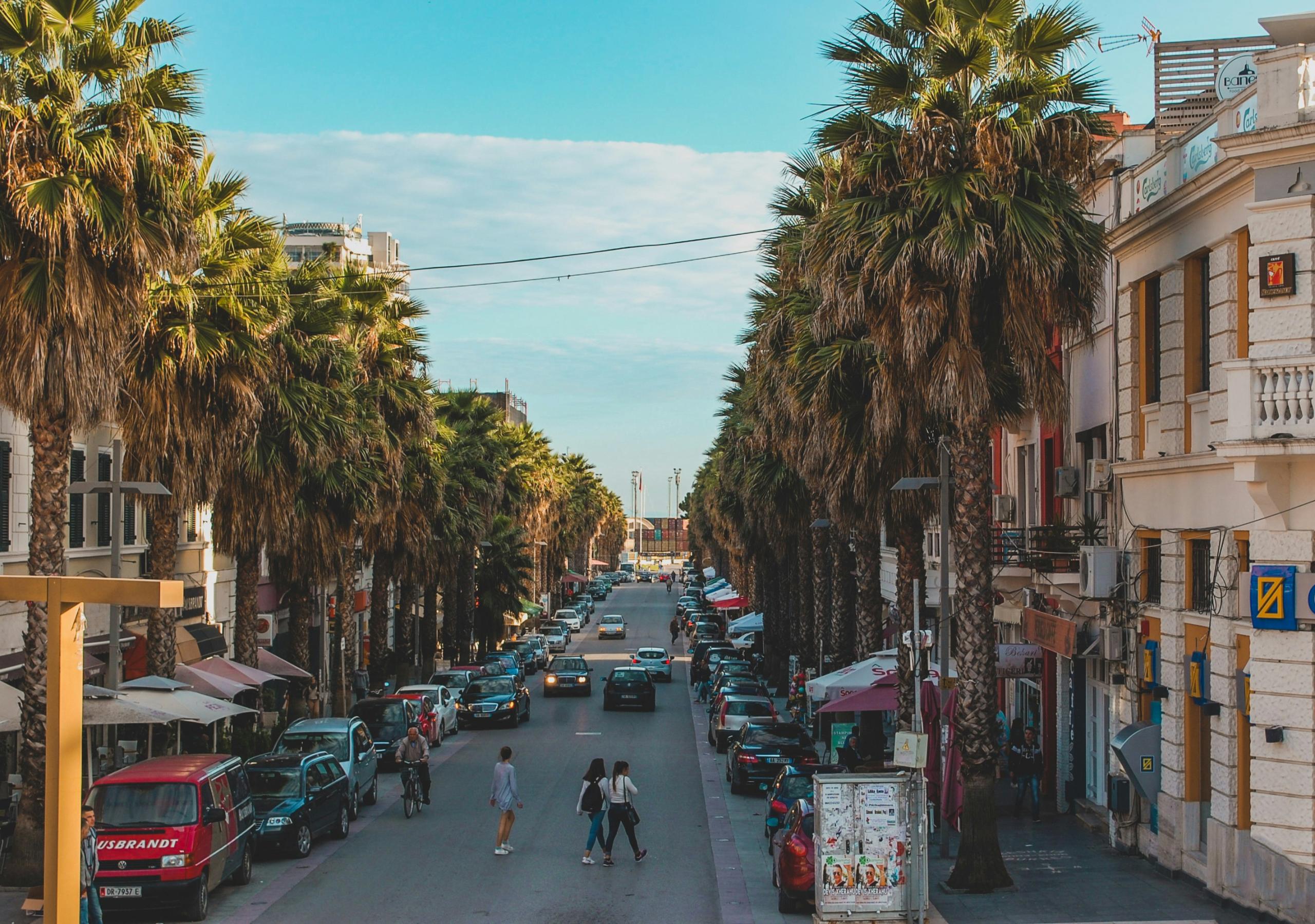
Durrës, Albania's most important port city and second-largest urban centre, has been a crossroads of civilisations for nearly 3,000 years. Founded by Greek colonists as Epidamnus in 627 BC and known as Dyrrachium under the Romans, it was one of the most strategically vital ports in the ancient Mediterranean — the western terminus of the Via Egnatia, the great Roman road linking Rome to Byzantium. Today, Durrës pairs extraordinary ancient heritage with long sandy beaches, a lively promenade, and an energetic modern character.
The largest amphitheatre in the Balkans and one of the largest in the entire Roman world, originally capable of holding 20,000 spectators. Built in the 2nd century AD and later buried by centuries of urban construction, it was paradoxically well-preserved. Inside the seating galleries, excavators discovered a unique early Christian chapel with extraordinary Byzantine mosaics still visible in situ. The site remains partly unexcavated, adding to the sense of discovery.
One of Albania's longest urban beaches — a broad strip of sand stretching for kilometres along the Bay of Durrës, fringed by a promenade of hotels, restaurants, and cafés. Extraordinarily popular with Albanian families in summer, the beach creates a lively, celebratory atmosphere. The sea is shallow and calm, making it ideal for families, and the beach becomes progressively quieter and cleaner heading north toward the villages of Currila and Kavajë.
Albania's most important archaeological museum, located near the Roman amphitheatre, housing an exceptional collection spanning 3,000 years of history. Highlights include Greek and Illyrian pottery, marble sculpture, Roman mosaics, glass, jewellery, and coins from the ancient city — documenting the remarkable cultural mixing at this crossroads of the Greek, Roman, and Illyrian worlds.
A solitary medieval tower rising from the centre of modern Durrës — the most visible relic of the city's remarkable fortifications, built during the brief period of Venetian control in the 15th century. Its distinctive architecture is a reminder of the Adriatic commercial empire that once linked Durrës, Venice, and the Albanian coast in a web of trade and culture.
Sections of Durrës's ancient city walls — among the most extensive surviving from antiquity in the western Balkans — thread through the modern city. Built initially in the 5th century AD to defend against Visigoths and later expanded, the walls incorporate Roman, Byzantine, Venetian, and Ottoman construction phases. The most impressive section near the amphitheatre reveals towers and gateways that give a dramatic sense of the ancient city's scale.
Set in a wooded park above the city, the Villa Mbretërore was the summer residence of King Zog I of Albania in the 1930s. The Art Deco villa blends Albanian and Italian architectural influences and fell into disrepair during the communist period, though it has been partially restored. The surrounding park provides a pleasant escape from the city and offers views over the Adriatic, representing a poignant episode in Albania's brief experiment with monarchy.