Loading destination…
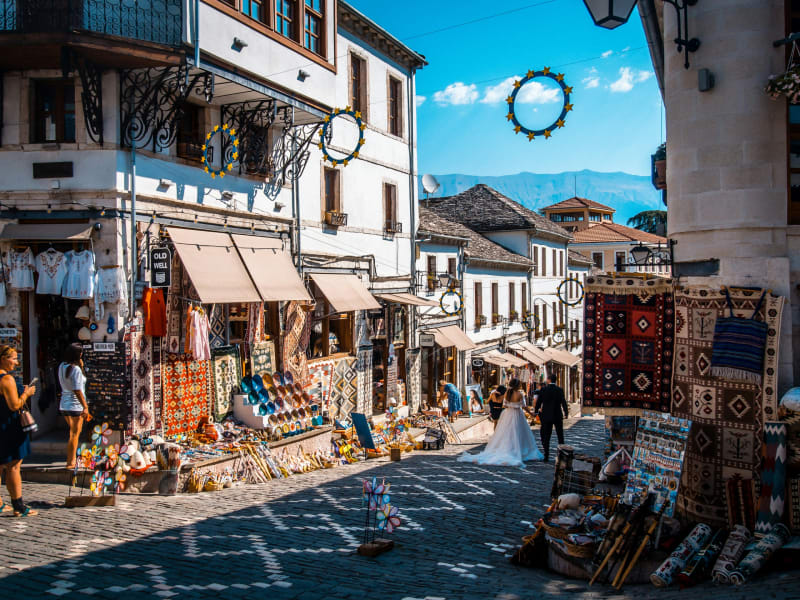
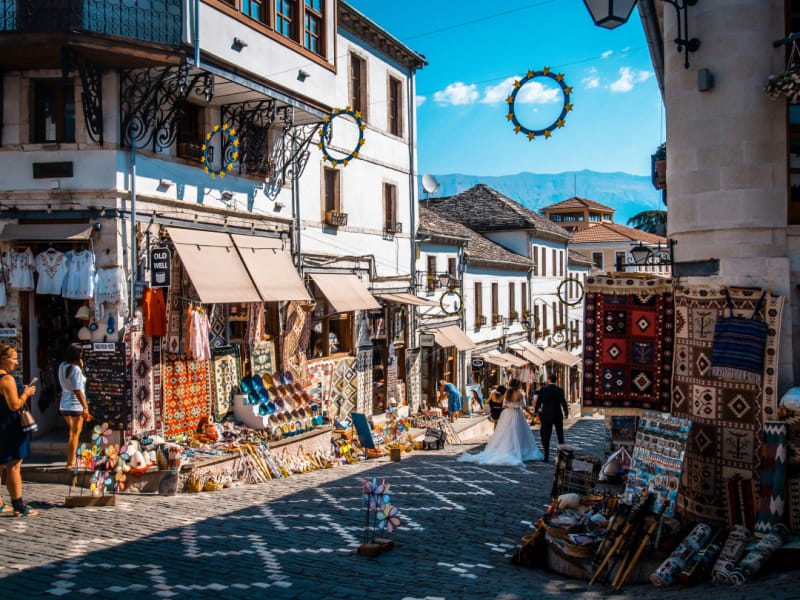
Gjirokastër, the ‘City of Stone’, is one of the most dramatic and best-preserved towns in the Balkans. Its skyline is dominated by a colossal Ottoman castle looming over a cascade of grey-stone mansions with distinctive slate roofs and towers — an ensemble that earned UNESCO World Heritage Status in 2005. Birthplace of both communist dictator Enver Hoxha and Nobel Prize-winning novelist Ismail Kadare, Gjirokastër carries a complex, layered history that makes exploring its atmospheric lanes one of Albania’s most memorable experiences.
One of the largest castles in the Balkans, Gjirokastër Castle dominates the city from a dramatic rocky ridge. Originally Byzantine and later expanded by Ottoman ruler Ali Pasha of Ioannina, the castle served as a prison throughout the communist period. Today it houses a National Armoury Museum, a captured US Air Force reconnaissance jet from 1957, and multiple towers with sweeping views over the UNESCO-listed old town and the Drinos River valley.
Housed in the birthplace of Albania’s communist dictator Enver Hoxha — a traditional 18th-century kule (tower house) in the old town — this museum recreates traditional Albanian domestic life with period furnishings, textiles, weapons, and household items. The house itself, with its elaborately carved wooden ceilings and defensive lower floors, is a magnificent example of Gjirokastër’s distinctive vernacular architecture.
The finest example of Gjirokastër’s unique Ottoman-Albanian tower house architecture, the Zekate House was built in 1811 and has been in the same family for seven generations. Its dramatic double staircase, beautifully carved wooden ceilings, and majestic reception rooms with panoramic windows overlooking the valley make it one of the most remarkable historic houses in the Balkans.
The historic commercial heart of Gjirokastër, a collection of Ottoman-era stone shops and arcades clustering around the foot of the castle hill. Once a major trading hub on the route between the Adriatic and the Greek interior, the bazaar today houses traditional craftsmen, souvenir sellers, and excellent small restaurants serving local specialities — including the city’s famous qifqi (rice balls) and local wine.
A vast underground bunker complex secretly built by the communist regime as a nuclear shelter and military command centre during the Cold War. A guided tour through its long underground corridors gives a remarkable insight into the paranoid mentality of the Hoxha era and the extreme lengths to which the regime prepared for the invasion it always feared.
A Byzantine Orthodox church dating to the 13th century, one of the oldest surviving religious buildings in Albania. Though damaged during the communist atheist campaign, its walls preserve fragments of Byzantine frescoes. Located just below the castle, it offers a moving reminder of the country’s pre-Ottoman Christian heritage.