
Loading destination…
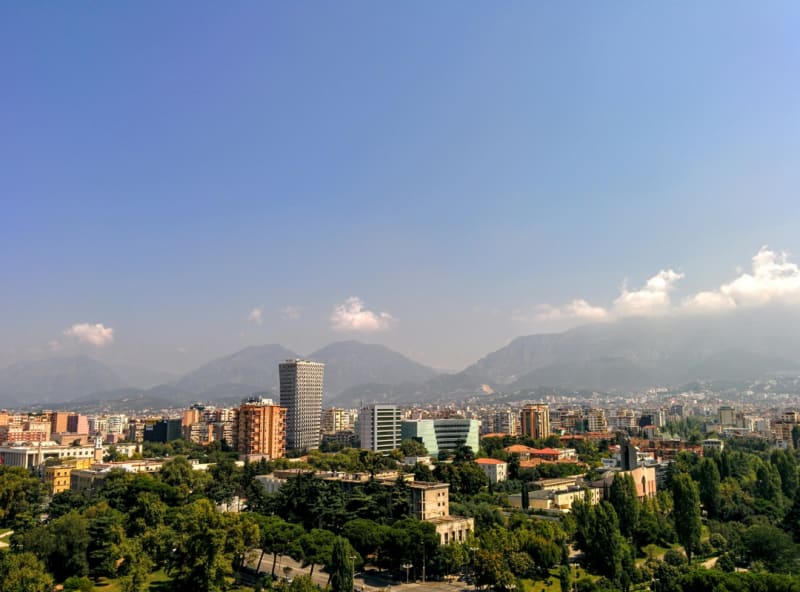
Tirana, Albania’s colourful and rapidly transforming capital, is one of the Balkans’ most engaging cities. Bold painted buildings, a thriving café culture, Ottoman mosques, communist relics, and vibrant art galleries sit side-by-side in a city that wears its complex history proudly and looks firmly toward a creative future.
Tirana’s vast central square, dominated by the equestrian statue of national hero Gjergj Kastrioti Skanderbeg. Surrounded by the Et’hem Bey Mosque, National History Museum, and Clock Tower. The heart of the city and the best starting point for exploring Tirana.
Two extraordinary museums built inside communist-era nuclear bunkers. Bunk’Art 1 is a vast 5-storey underground complex documenting Albania’s communist isolation; Bunk’Art 2 focuses on the Interior Ministry’s secret police history. Among the most unusual museums in Europe.
A beautiful 19th-century Ottoman mosque on Skanderbeg Square, notable for its exquisite interior frescoes depicting trees, waterfalls, and bridges — unusually ornate for Islamic sacred architecture. One of the few buildings to survive Hoxha’s atheist purges intact.
Albania’s largest museum, covering 5,000 years of Albanian history from Illyrian antiquity through Byzantine and Ottoman rule to the communist era. Its enormous socialist-realist mosaic facade is itself one of Tirana’s most striking sights.
Originally built as a museum to communist dictator Enver Hoxha, this brutalist pyramid has been reimagined as TUMO Tirana — a youth technology and arts centre. Its sloping concrete sides are now covered in murals and regularly climbed by local teenagers.
Once the exclusive residential area reserved for the communist elite, Blloku is now Tirana’s trendiest neighbourhood — packed with boutique cafes, bars, restaurants, and boutiques. The former villa of dictator Enver Hoxha sits preserved at its heart.
A beautifully restored Ottoman-era market, now the city’s most vibrant food hub. Stalls sell fresh produce, local cheese, pickles, and spices alongside artisan shops and excellent restaurants serving traditional Albanian cuisine.
Albania’s foremost art museum, housing an extensive collection of Albanian paintings, sculptures, and applied arts from the 19th century to the present. The socialist-realist works from the communist period are particularly fascinating for their propagandist grandeur.
A forested mountain rising 1,613 metres above Tirana, reached by a spectacular cable car (Dajti Ekspres). Offers hiking trails, restaurants, and panoramic views over the capital and beyond. A popular escape from city heat.
A vast green lung on the edge of the city, centred on an artificial lake created in the 1950s. Popular with joggers, cyclists, and families, the park is dotted with cafes, a zoo, and a memorial to the Albanian Holocaust victims.
