Loading destination…
Kamakura, a coastal city 50 km south of Tokyo, was Japan’s de facto capital during the Kamakura Period (1185–1333). Today it is one of Japan’s most popular day trips, celebrated for its colossal bronze Buddha, lush hilltop temples, and scenic hiking trails connecting shrines through cedar forests — all within earshot of the Pacific Ocean.
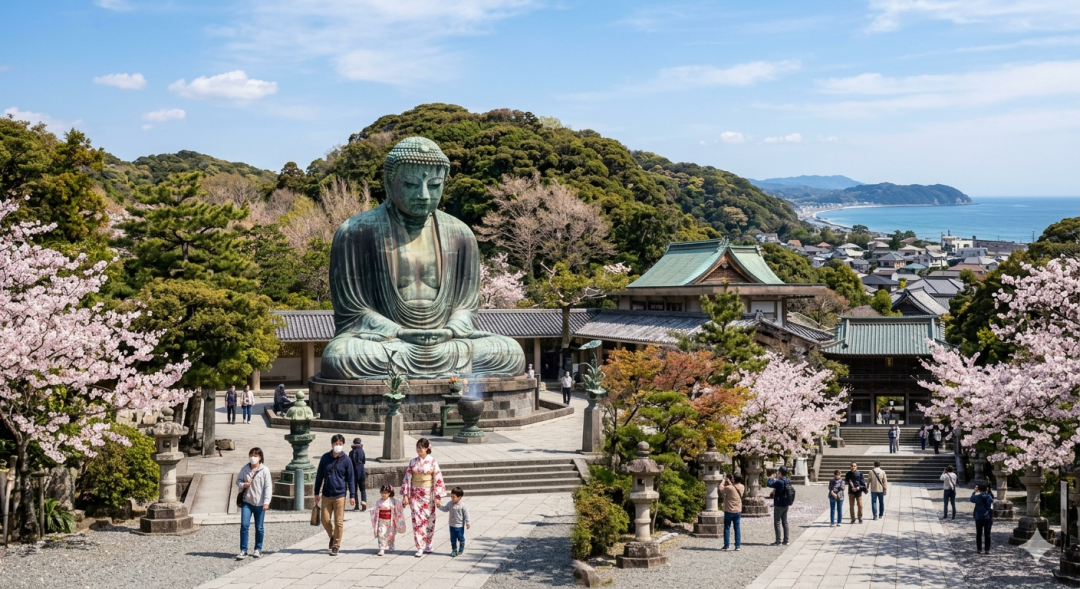
Japan’s second-largest bronze Buddha statue at 11.4 m, cast in 1252 and originally housed in a wooden hall swept away by tsunamis. The Daibutsu now sits serenely in the open air, and visitors can enter the hollow statue through vents in its sides.
Kamakura’s most important Shinto shrine, dedicated to Hachiman the god of war and patron of samurai. A broad tree-lined avenue (Wakamiya Oji) leads from the sea directly to the shrine. Famous for its autumn chrysanthemum festival and January archery ceremonies.
A Rinzai Zen temple with a stunning bamboo grove — smaller and more intimate than Arashiyama but wonderfully peaceful. Matcha tea is served in a traditional tea house inside the bamboo garden. One of Kamakura’s most atmospheric spots.
A small island connected to the mainland by a bridge, home to the Enoshima Shrine, sea caves, the Enoshima Sea Candle observation tower, and beautiful ocean views. A popular addition to a Kamakura day trip, best combined via the Enoden tram.
A network of ancient pilgrimage routes links Kamakura’s hilltop temples through cedar and bamboo forests. The Daibutsu Hiking Course and Tenen Hiking Trail offer beautiful ridge walks connecting major shrines with ocean and mountain views.