Loading destination…
Nara, Japan’s first permanent capital (710–784 AD), is a compact city of extraordinary historical treasures set within beautiful parkland. Over 1,200 friendly Sika deer roam freely through Nara Park, considered sacred messengers of the gods, alongside some of Japan’s oldest and grandest temples and shrines. An easy day trip from Kyoto or Osaka.
Housing the world’s largest bronze Buddha statue (Daibutsu) at 15 m tall, Todai-ji’s Great Buddha Hall is also the world’s largest wooden structure. A UNESCO World Heritage Site and one of Japan’s most awe-inspiring temples, founded in 728 AD.
A vast public park home to over 1,200 wild Sika deer, considered sacred in Shinto tradition. Visitors can buy shika senbei (deer crackers) to feed them. The park connects all of Nara’s main temples and shrines, making it the heart of any visit.
A UNESCO-listed Shinto shrine founded in 768 AD, deep in the forest of Mt. Mikasa. Famous for over 3,000 stone and bronze hanging lanterns lit twice a year during the Mantoro Festival, creating a mesmerising flickering spectacle.
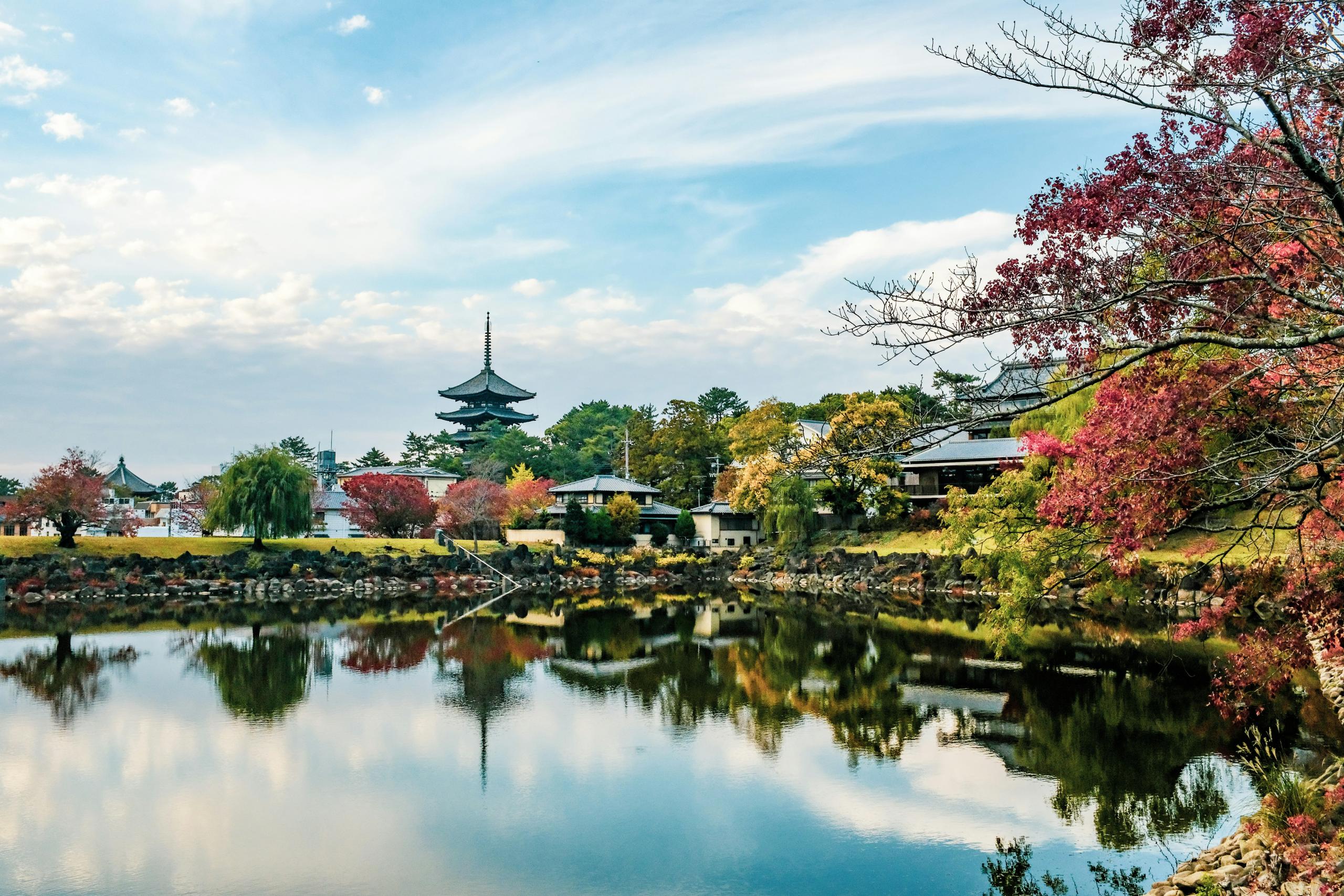
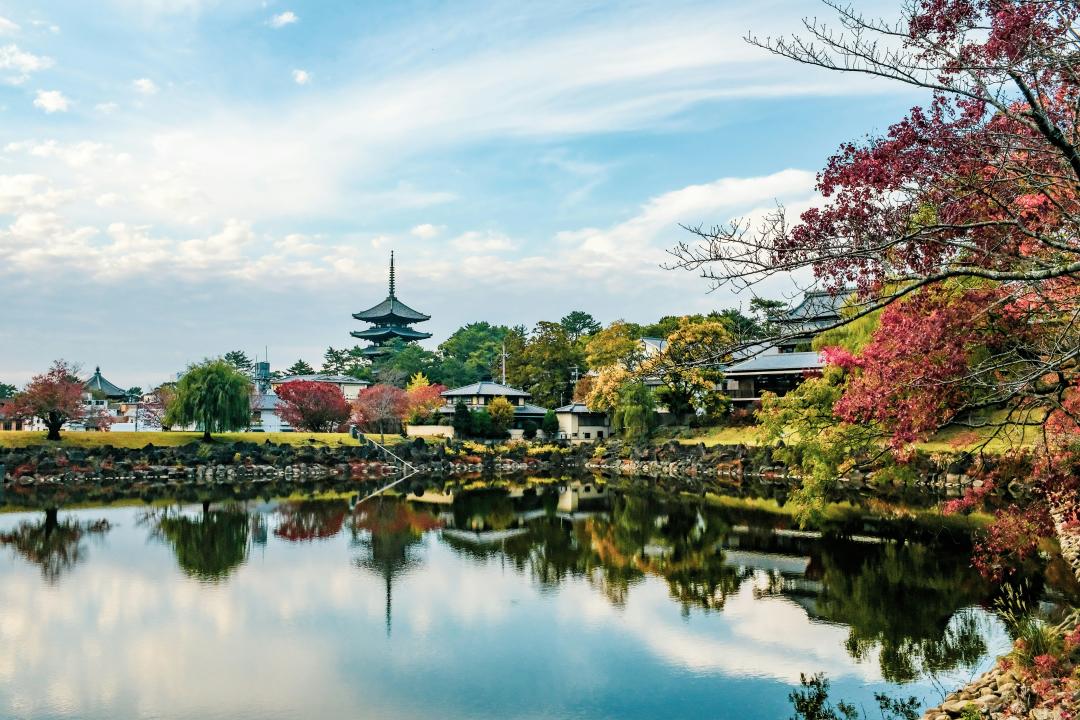
One of Nara’s great temple complexes, founded in 669 AD. Its five-storey pagoda — the second tallest in Japan — is one of Nara’s most iconic silhouettes. The National Treasure Museum houses exceptional Buddhist sculptures.
The world’s oldest surviving wooden structures, dating to 607 AD. A UNESCO World Heritage Site featuring the Western Precinct’s five-storey pagoda and the Eastern Precinct’s Yumedono (Hall of Dreams). A profound site for understanding Japan’s earliest Buddhist heritage.
Nara’s preserved historic merchant district, with narrow alleyways lined by traditional machiya townhouses, craft shops, sake breweries, and small cafes. A relaxed contrast to the temple circuit and excellent for experiencing old-town Japan.