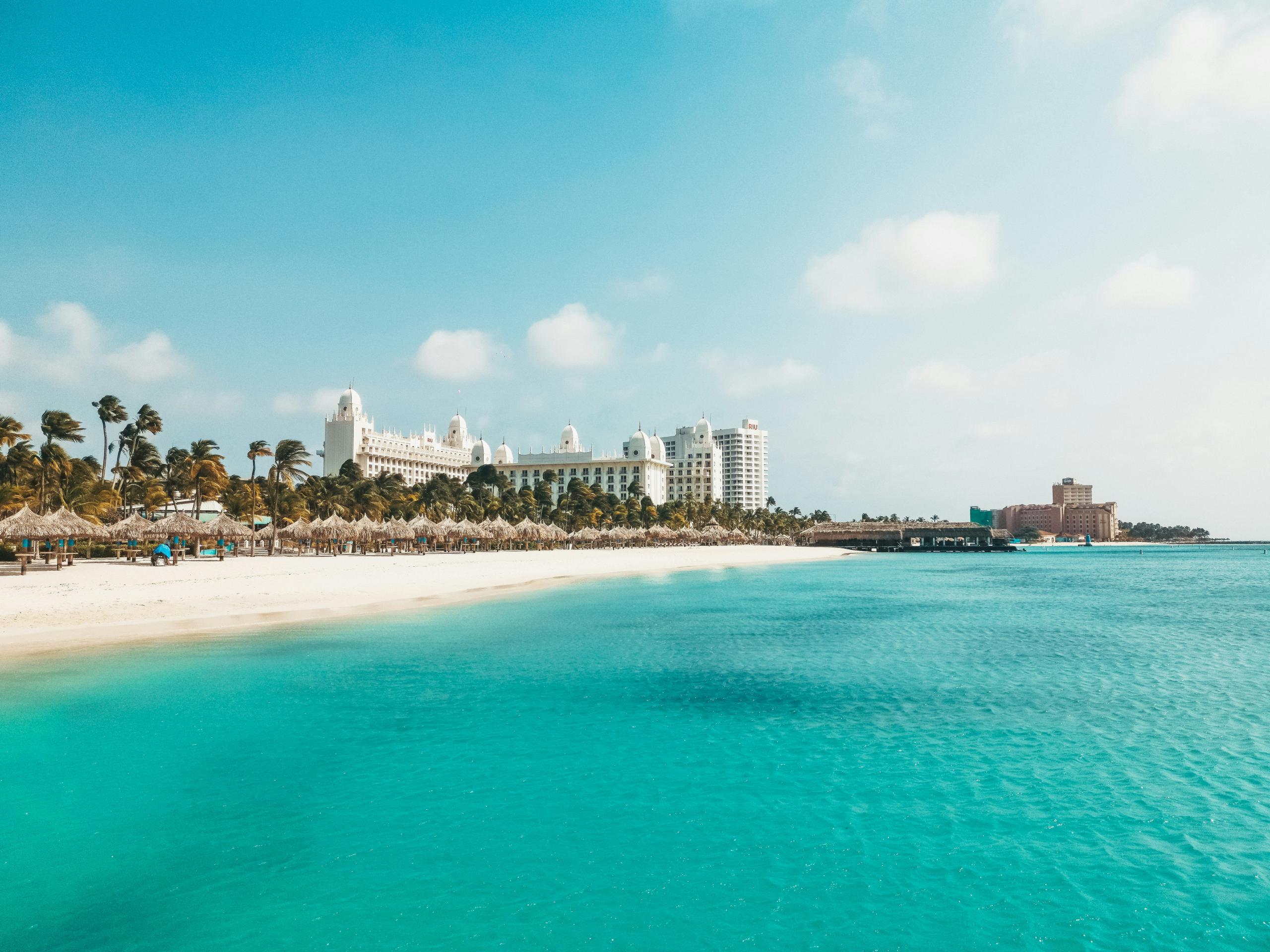
Aruba is the rare Caribbean island that can promise sunshine and deliver on it — 360 days of it a year, on average, thanks to a location just outside the hurricane belt and trade winds that keep the heat in check even in August. This Aruba itinerary is built around that reliability: a full week that mixes the postcard beaches everyone comes for with the desert interior, shipwreck diving, and Dutch-Caribbean culture that most first-time visitors never get past their resort to see.
Whether you're planning a honeymoon, a family trip, or a week away from a Northeast winter, this guide covers a complete 7-day Aruba itinerary day by day, plus the practical details — costs, transportation, visa rules, safety, and the food worth seeking out — that turn a good trip into a great one.
Aruba Quick Facts
Capital: Oranjestad • Currency: Aruban Florin (AWG) — US dollars widely accepted
Languages: Papiamento, Dutch, English, Spanish • Time zone: AST (UTC−4)
Best time to visit: Year-round • Recommended stay: 5–10 days
Average daily budget: USD 100–350 per person depending on travel style
📅 Best Time to Visit Aruba
Aruba is one of the only Caribbean islands with a genuine claim to being a true year-round destination. Sitting just south of the hurricane belt, it sidesteps the tropical storm risk that shapes travel planning everywhere else in the region, and its steady trade winds keep daytime temperatures of 28–32°C feeling comfortable even in the height of summer. January to April is peak season — the driest stretch, and also when Aruba's Carnival takes over Oranjestad with parades, music, and costume bands. October and November bring slightly more overcast days but also the best hotel rates. Our Best Time to Visit Aruba tool breaks down month-by-month weather and pricing, and our Caribbean hurricane season guide explains exactly why Aruba is the exception to the region's June–November storm risk.
✈️ Getting to Aruba & Getting Around
Most visitors fly into Queen Beatrix International Airport (AUA), a short 10–15 minute drive from the Palm Beach resort strip and Oranjestad. Direct flights run from major US hubs (Miami, Atlanta, New York, Newark), Toronto, and Amsterdam. Use our flight search tool to compare fares from your home airport.
- Rental car: The single best way to see the island beyond the resort strip — you'll need one for Arikok National Park, the rock formations, and the north coast. Book ahead in peak season (January–April), when cars sell out.
- Taxis: Fixed government rates apply between the airport, Oranjestad, and the main resort areas, but taxis add up quickly if you're moving around daily.
- Public buses (Arubus): A cheap, reliable way to shuttle between Oranjestad and the Palm Beach/Eagle Beach hotel strip, but they don't reach the national park or the rock formations.
- ATV and Jeep tours: A popular alternative to self-driving for Arikok National Park and the Natural Pool — guided tours handle the rugged terrain for you.
🗺️ Aruba 7-Day Itinerary
This itinerary balances beach time with the island's desert interior, water sports, and culture, front-loading the more physical days and leaving room to slow down toward the end of the week.
Day 1 — Arrival & Eagle Beach
Settle in gently after your flight. Eagle Beach, consistently rated among the world's best beaches, is a short taxi ride from most hotels and far less crowded than the Palm Beach strip. Spend the afternoon under its famous leaning fofoti trees, then walk into Oranjestad for an early dinner of fresh red snapper and a first Balashi beer.
Day 2 — Palm Beach & Water Sports
Palm Beach is Aruba's liveliest stretch — resorts, restaurants, and calm, clear water ideal for swimming. Book a morning of parasailing or a catamaran sail with a snorkel stop, then head to Fisherman's Huts (Hadicurari Beach) in the afternoon, one of the world's best windsurfing and kitesurfing spots thanks to Aruba's steady 18–25 knot trade winds. Cap the day with sunset drinks at Palm Pier.
Day 3 — Arikok National Park
Arikok covers nearly 20% of the island and looks nothing like the beach-postcard Aruba — cacti-studded desert, volcanic rock, and indigenous cave paintings. Take a full-day ATV or Jeep tour to reach the hidden Natural Pool (Conchi), a volcanic-rock swimming hole battered by Atlantic waves, and Dos Playa, a dramatic double beach inside the park. Bring more water than you think you need — the desert heat is intense, and there's no shade for long stretches.
Day 4 — Snorkeling & the Antilla Shipwreck
Aruba's calm, clear leeward coast is dotted with excellent snorkel spots. Start at Boca Catalina or Mangel Halto for shallow coral reefs and tropical fish, then join a boat trip out to the Antilla, a WWII-era German shipwreck and one of the largest accessible wrecks in the Caribbean — a highlight for certified divers, and snorkelable on calmer days from the surface.
Day 5 — The North Coast & Rock Formations
Rent a car for the day and loop the rugged north coast: the whitewashed California Lighthouse for panoramic views over the dunes, the hilltop Alto Vista Chapel, and the towering Ayo and Casibari Rock Formations — giant monoliths with staircases leading to viewpoints and, at Ayo, ancient petroglyphs. This is Aruba at its most otherworldly, and almost nobody photographs it compared to the beaches.
Day 6 — San Nicolas & Baby Beach
Aruba's self-declared "cultural capital," San Nicolas has reinvented its old oil-town streets as an open-air gallery through the Aruba Art Fair, with murals from international artists covering entire buildings. Nearby Baby Beach is a shallow, calm lagoon that's ideal for families and beginner snorkelers. If your visit falls on a Tuesday, don't miss the free Bon Bini Festival at Fort Zoutman back in Oranjestad that evening — traditional music, dance, and local food in the island's oldest building.
Day 7 — Relax & Depart
Keep the last day unhurried. Manchebo Beach is wide, quiet, and known for its wellness-resort atmosphere — a good spot for a final morning swim. Pick up last-minute gifts at the Renaissance Marketplace in Oranjestad, or tour the Aruba Aloe Factory, before heading to the airport. See our full Aruba travel guide for a complete breakdown of every beach, attraction, and neighbourhood on the island.
🍴 What to Eat in Aruba
Aruban food blends Dutch, Venezuelan, African, and indigenous Arawak influences into something genuinely distinct from the rest of the Caribbean.
- Keshi yena — Aruba's national dish: a whole Edam or Gouda cheese hollowed out and stuffed with spiced chicken or beef, olives, capers, and raisins, then baked until tender.
- Pastechi — a fried pastry filled with cheese, spiced meat, or tuna — Aruba's answer to the empanada, and the default breakfast on the go.
- Funchi and pan bati — cornmeal polenta and a slightly sweet cornmeal pancake, the classic sides for stewed fish and grilled meats.
- Ceviche Arubano — fresh mahi-mahi or conch marinated in lime, milder and sometimes coconut-touched compared to Peruvian-style ceviche.
- Balashi beer — the island's own lager, brewed with purified desalinated seawater; the default drink at every beach bar.
- Aruba Ariba — the signature cocktail, built on dark rum and Coecoei, a local cactus liqueur unique to the island.
🏨 Where to Stay in Aruba
- Palm Beach ("High-Rise" strip) — The liveliest resort area, with the biggest hotels, casinos, and restaurants within walking distance. Best for first-timers who want everything close by.
- Eagle Beach ("Low-Rise" strip) — Quieter, smaller-scale resorts and condos facing one of the world's top-ranked beaches. A good middle ground between convenience and calm.
- Oranjestad — Fewer beachfront options, but the best base for exploring on foot, with easy access to restaurants, shopping, and the weekly Bon Bini Festival.
- Savaneta — A quiet, local fishing village on the south coast with a handful of boutique stays and Aruba's oldest settlement, for travellers who want to get away from the resort strips entirely.
💶 Aruba Travel Costs
Aruba sits at the higher end of Caribbean pricing, but a fixed exchange rate (roughly 1.79 AWG to the US dollar) and near-universal acceptance of USD make budgeting straightforward.
| Travel style | Daily budget (USD) | What it includes |
|---|---|---|
| Budget | 100–130 | Guesthouse, local restaurants in Oranjestad/San Nicolas, public bus, free beaches |
| Mid-range | 200–350 | Eagle Beach or Palm Beach resort, mix of local and resort dining, rental car for part of the week |
| Luxury | 500+ | Palm Beach high-rise resort, fine dining, private boat charters and guided tours |
Palm Beach resort-strip restaurants and hotel minibars are significantly marked up — eating at local spots in Oranjestad and San Nicolas typically saves 40–60%. Use our Budget Calculator to build a full estimate around your own trip length and travel style.
🛂 Visa & Entry Requirements
Aruba is a constituent country of the Kingdom of the Netherlands with its own entry rules, separate from the EU/Schengen area. Citizens of the US, Canada, UK, EU, Australia, and many other countries can visit visa-free for stays of up to 30 days (extendable to 90). You'll need a valid passport, proof of onward travel, and accommodation details. Check your exact requirements with our free Visa Requirements Checker before booking flights.
🛡️ Safety Tips for Aruba
Aruba is consistently ranked among the safest islands in the Caribbean, with violent crime against tourists extremely rare.
- The Caribbean (west and south) coast has calm, safe swimming water; the Atlantic (east and north) side has powerful surf and dangerous currents unsuitable for swimming.
- Watch for time-share touts along the Palm Beach strip — politely decline all unsolicited offers — and agree on taxi fares upfront near the airport and cruise terminal.
- Use ATMs or local banks for currency exchange rather than resort front desks, which mark up rates significantly.
- Tap water is safe to drink island-wide, thanks to Aruba's award-winning desalination plants — bottled water isn't necessary.
- Emergency numbers: 100 (police), 911 (ambulance/fire).
💡 Insider Tips
- US dollars are accepted everywhere at a fixed rate — there's no real need to exchange money if you're arriving from the US.
- Rent a car for at least two or three days of the week; taxis between the resort strip and Arikok or the north coast add up fast.
- Apply SPF 50+ generously and reapply often — Aruba's reflected beach light intensifies UV exposure well beyond what the temperature suggests.
- Bring more water than feels necessary for any Arikok hike or ATV tour — there's little shade and the desert heat is deceptive.
- If you're weighing Aruba against another island for a beach trip, our Aruba vs Barbados comparison breaks down which suits your travel style best.
🗺️ Nearby & Alternative Destinations
If a week in Aruba leaves you wanting more Caribbean island-hopping, the ABC islands' sister destinations Bonaire and Curaçao are both a short flight away and share Aruba's position outside the hurricane belt. Browse more Caribbean destination guides to plan an extended trip, or see how Aruba stacks up against another top beach pick in our Aruba vs Barbados guide.
❓ Aruba Itinerary FAQ
How many days do you need in Aruba?
5 days covers the main beaches, Arikok National Park, and a snorkeling trip comfortably. 7 days — this itinerary — adds the north coast rock formations, San Nicolas culture, and a slower pace without feeling rushed. Aruba's own recommended stay is 5–10 days, which also suits travellers who want to add a day trip to Bonaire or Curaçao.
What is the best time to visit Aruba?
Aruba is a genuine year-round destination thanks to its location outside the Caribbean hurricane belt and consistent trade winds. January–April is the driest and busiest stretch, coinciding with Carnival season, while October–November brings marginally more cloud cover and the best hotel rates.
Is Aruba safe for tourists?
Yes — Aruba is consistently ranked one of the safest islands in the Caribbean. Standard precautions apply: keep valuables off unattended beach towels, agree on taxi fares upfront, and stick to the calm Caribbean-side beaches for swimming rather than the rough Atlantic coast.
Do I need a visa to visit Aruba?
Aruba has its own entry rules, separate from the EU/Schengen area. Citizens of the US, Canada, UK, EU, and Australia can visit visa-free for up to 30 days (extendable to 90). Check our Visa Requirements Checker for your specific passport.
How much does a week in Aruba cost?
Budget travellers can manage on USD 100–130/day using guesthouses and local restaurants. Mid-range trips — an Eagle Beach or Palm Beach resort with a mix of local and resort dining — run USD 200–350/day. A week for two people at mid-range typically totals USD 2,800–4,900 excluding flights.
What should I eat in Aruba?
Don't miss keshi yena (the stuffed-cheese national dish), pastechi for breakfast, fresh grilled red snapper, and a Balashi beer or Aruba Ariba cocktail at sunset. Local spots in Oranjestad and San Nicolas serve more authentic — and considerably cheaper — versions than the resort-strip restaurants.
Ready to build out the rest of your trip? Explore more destination guides, check the best months to visit Aruba, and plan your budget with our free Budget Calculator.